Making More Doesn't Mean Cheaper
There's a twist to this

Bjorn Lomborg pointed out 25 years ago that solar power was getting 20% a year - 4% a quarter - cheaper. Had been for a couple of decades, no one could see why it wouldn’t continue to do so. Here we are that two to three decades later and solar power has been getting 20% a year cheaper. All that effort, all those subsidies, had no effect at all. We just continued to learn by doing at the same rate as before - vast bankrolls of human wealth just pissed up the wall.
So, there is that. On the other hand it’s also true that this does not apply to all technologies. So, the argument that if we just subsidise building more will reduce the price doesn’t even lead to the reduced price. Which is what this paper is about:
We love to say “costs fall X% every time capacity doubles.” This paper looks at 87 technologies and says: actually, no. Past learning rates are not reliable predictors of future learning.
The paper is here.
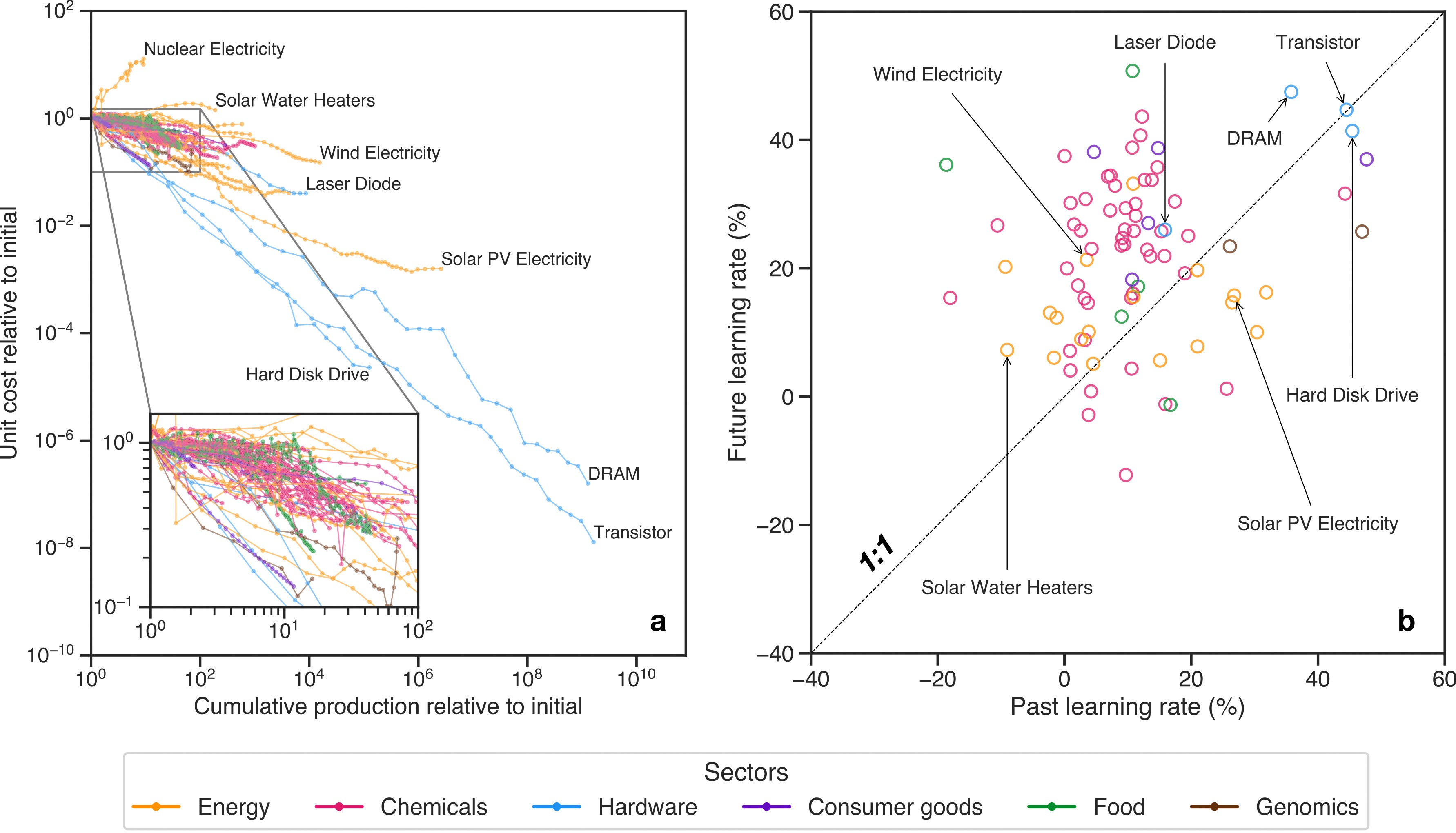
So the argument that if we want more and cheaper we must subsidise doesn’t, in fact, work out. For not everything does become cheaper the more we have of it. We’re back with our usual economic argument of “It depends”. Which is fair enough as that is our usual economic argument and if that’s what the usual argument is then that’s what we should expect the answer to usually be. Logic that is.
So, that’s that then. Except that, clever people as we are, we need to go that one step further. For there’s a part of the set not being measured here. The things where we never do expand production because we realise there are no economies of scale to doing so. Things where the marginal cost of production rises as production expands. Or even those where it stays static. For at that point we meet this truth and verity:
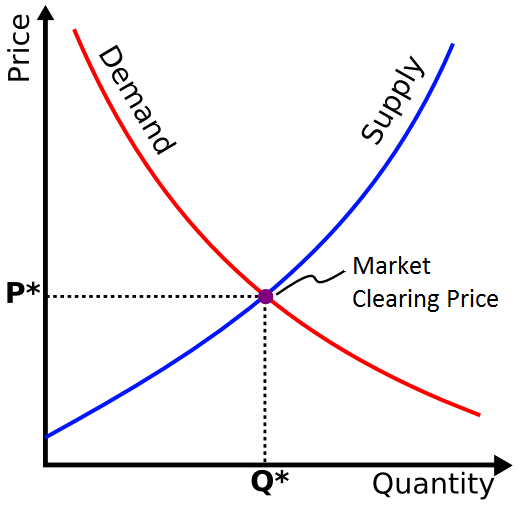
We need the production cost to fall as we expand production because we need to be able to drop the price to create the demand for the expanded production. And if the production cost doesn’t drop then we’ll never see the increase in production - anyone who tries goes bust.
Thus our measurement up at the top doesn’t include all those things where we already know that costs don’t fall with increased production.
Which is interesting, no?
Jack Devanney of The Gordian Knot substack gives detailed accounts of why the cost of nuclear has been going the wrong way and how to rectify that.
Good point well put, which needs constant repetition. Every private and public merger should be viewed with great suspicion too because the chances of hitting the economic sweet spot for all the functions, products and services in a big organisation is tiny and it is just as likely to under or overshoot leading to higher costs and lower value. In the UK everyone should be writing to their MPs to point out that about the current fad for merging government departments, local governments, police forces without considering what drives economies, is more likely to increase costs and lower social welfare than improve things and suggesting they just do less better.